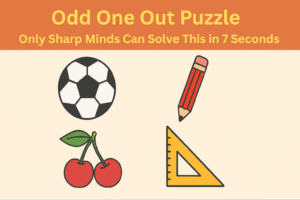




In the fast-paced digital world, where distractions are everywhere, brain teasers and puzzles have emerged as a refreshing way to sharpen our focus while having fun. One of the most engaging and popular challenges today is the “Odd One Out Puzzle.” These puzzles may appear simple, but when combined with a strict time frame, such as solving them within 7 seconds, they quickly become a test of focus, observation, and IQ.
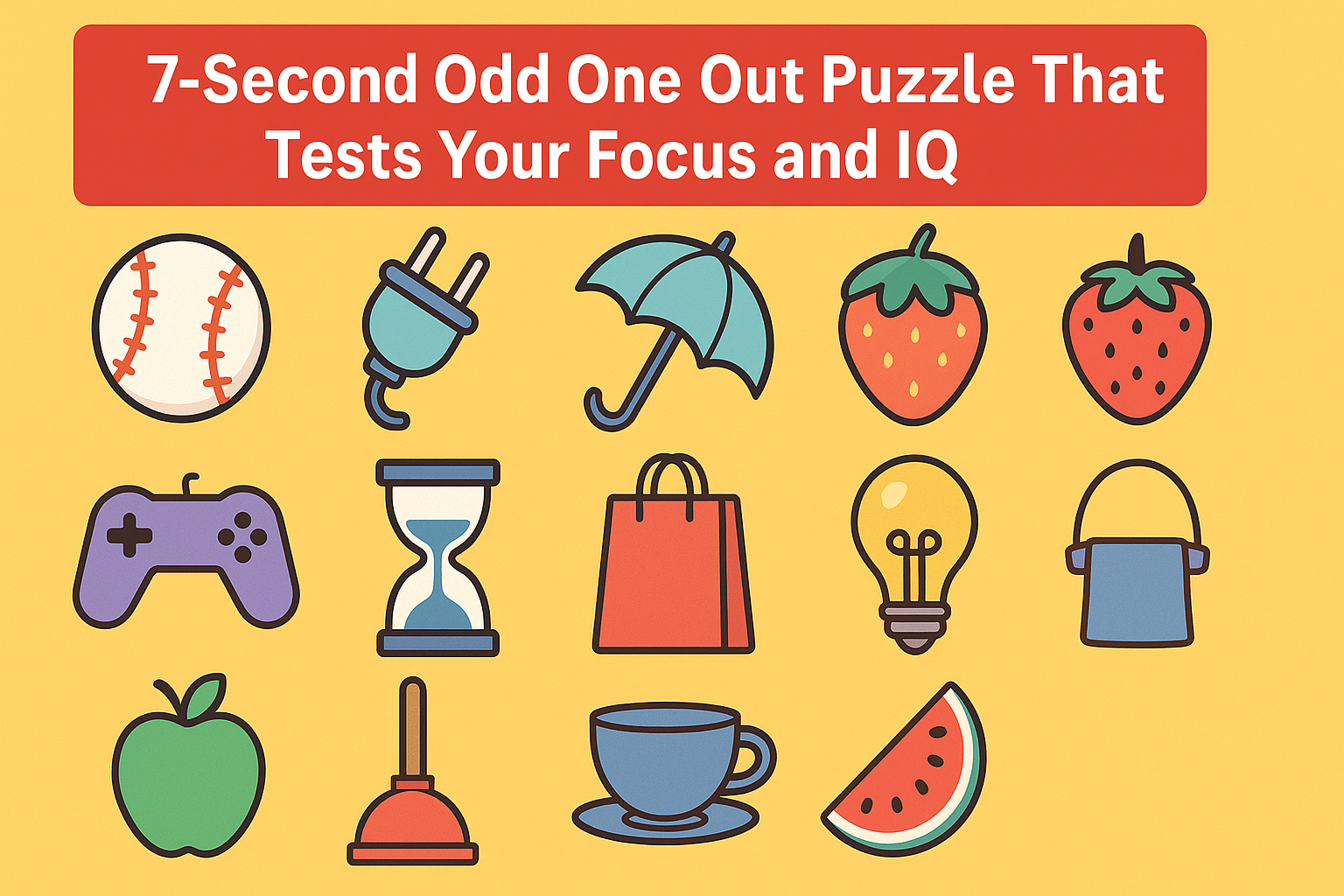
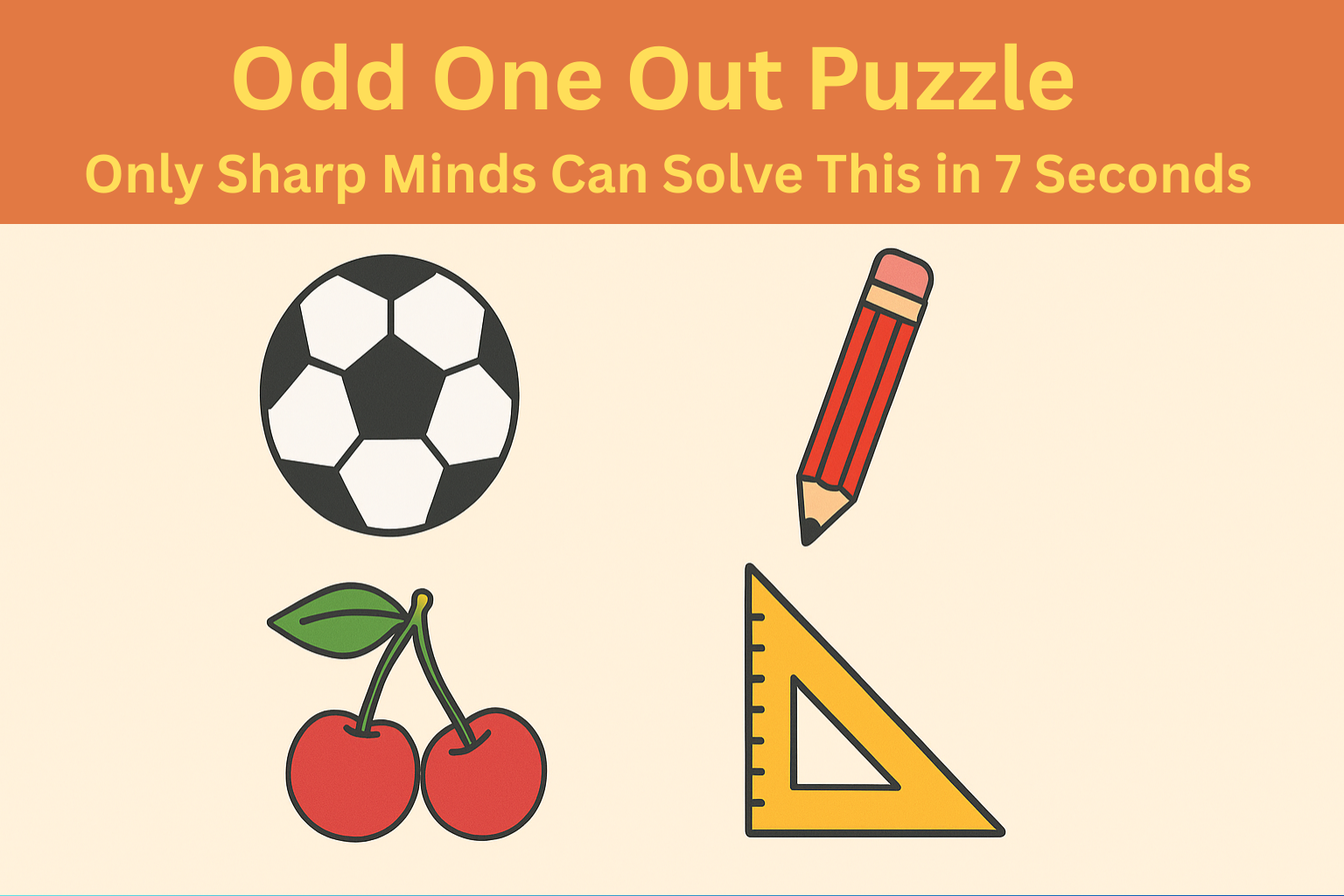
The puzzle in the image above challenges you to find the odd item among a group of objects. While it might look like child’s play, the real challenge lies in completing it in just seven seconds. Only those with sharp minds and excellent concentration can succeed without hesitation.
In this article, we’ll break down why these puzzles are so addictive, how they test both focus and intelligence, the science behind quick thinking, and the benefits of practicing them daily.
What is an Odd One Out Puzzle?
An Odd One Out Puzzle is a type of brain teaser where you are presented with a set of items—these can be shapes, objects, numbers, or words—and your task is to identify the item that doesn’t belong in the group.
For example:
- Mango, Apple, Banana, Chair → Chair is the odd one out because it isn’t a fruit.
- 2, 4, 6, 8, 9 → 9 is the odd one out because it’s odd while the rest are even.
In visual puzzles like the one here, you must rely on quick observation to spot the item that doesn’t fit logically or visually with the others.
Why a 7-Second Challenge?
Without a time limit, most puzzles are solvable eventually. But the 7-second rule adds an adrenaline rush. It pushes your brain to work faster than usual and demands a heightened level of focus.
Here’s why the 7-second condition matters:
- Pressure Activation – Your brain goes into alert mode when faced with a countdown.
- Tests Focus – Distractions can cause you to lose valuable seconds.
- Measures Sharpness – Only those who can process patterns quickly will succeed.
- Encourages Fast Decision-Making – In real life, quick thinking is often more valuable than long, drawn-out reasoning.
This is why these puzzles are often marketed as IQ tests—not because they measure full intelligence, but because they reveal your processing speed and focus level.
Breaking Down the Puzzle in the Image
Let’s look at the puzzle shown above. There are multiple objects: a baseball, plug, umbrella, strawberries, game controller, hourglass, shopping bag, light bulb, apple, plunger, cup, and a slice of watermelon.
At first glance, everything seems normal. But when you observe closely, you’ll notice that most items either belong to everyday objects or fruits. The odd one out here is highlighted: the watermelon slice.
Why? Because while other fruits (like apple and strawberries) are whole, the watermelon is shown as a slice, breaking the uniformity. That subtle difference is what makes it the “odd one out.”
Now, could you have spotted this in just 7 seconds? That’s the true test of your focus and mental sharpness.
The Science Behind Odd One Out Puzzles
Odd one out puzzles tap into some fascinating aspects of cognitive science:
- Pattern Recognition: The human brain is naturally wired to spot patterns. When something breaks the pattern, it grabs attention—if you’re quick enough to notice.
- Cognitive Speed: These puzzles test how quickly you can process information. A 7-second deadline forces you to bypass hesitation and rely on instinctive reasoning.
- Selective Attention: To succeed, you must focus on what matters and ignore irrelevant details.
- Stress Handling: The ticking clock mimics real-world stress, where fast and accurate decisions are essential.
This is why puzzles like these aren’t just fun—they’re also brain workouts that enhance mental agility.
Benefits of Solving Odd One Out Puzzles
Far from being just a passing hobby, odd one out puzzles offer numerous benefits:
- Boosts Focus and Concentration – Trains your mind to pay attention to detail.
- Improves Memory – Engaging in puzzles strengthens short-term recall and logical memory.
- Encourages Critical Thinking – Teaches you to compare, contrast, and analyze quickly.
- Reduces Stress – Solving puzzles can be a calming escape from daily pressure.
- Enhances Problem-Solving Skills – Sharpens the ability to think under pressure.
- Fun Mental Exercise – They stimulate the brain in an enjoyable, non-academic way.
Tips to Solve Odd One Out Puzzles in 7 Seconds
If you want to train your brain to beat the 7-second challenge, here are some practical tips:
- Look for Categories: Quickly group items (fruits, objects, shapes) in your mind.
- Spot Visual Differences: Check color, size, or design variations.
- Don’t Overthink: First instincts are often correct in fast puzzles.
- Practice Daily: The more puzzles you attempt, the quicker your brain adapts.
- Stay Calm: Anxiety wastes precious seconds—focus on observation.
With consistent practice, you’ll notice yourself solving not just puzzles faster but also real-life problems with improved clarity.
7-Second Odd One Out Puzzle That Tests Your Focus and IQ – Answer
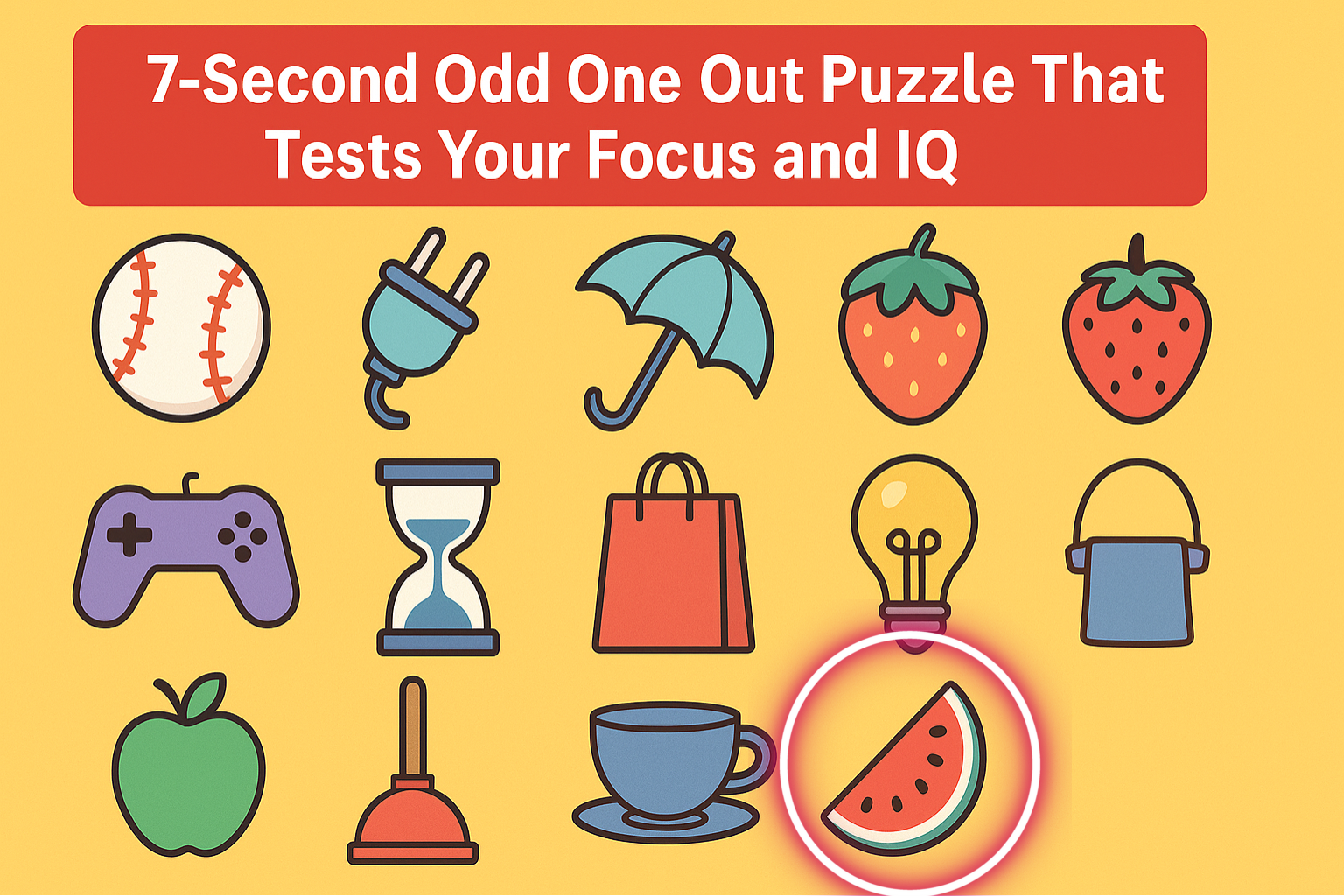
The watermelon slice (bottom-right corner)—it’s the only cut/sliced item, while everything else is a whole object.
Why These Puzzles Test Both Focus and IQ
IQ (Intelligence Quotient) isn’t just about knowledge—it’s about reasoning speed, adaptability, and observation. Odd one out puzzles combine:
- Focus → To quickly scan the group without being distracted.
- Reasoning → To identify the category and what doesn’t belong.
- Speed → To complete it in 7 seconds flat.
That’s why these puzzles are often used in aptitude tests and IQ games—because they measure practical intelligence in real time.
Odd One Out in Everyday Life
Believe it or not, we use odd one out skills every day:
- Spotting a typo in a text.
- Identifying an error in a financial statement.
- Recognizing a misplaced object in a room.
- Noticing a suspicious detail in a situation.
Practicing puzzles like these strengthens these everyday problem-solving abilities.
FAQs on Odd One Out Puzzles
Q1: Are odd one out puzzles really linked to IQ?
Not directly. They don’t measure overall IQ, but they do test processing speed, focus, and reasoning, which are components of intelligence.
Q2: Why is the 7-second limit important?
It adds urgency, testing how fast you can think under pressure. Without the time limit, puzzles lose their competitive edge.
Q3: Can children benefit from these puzzles?
Yes! They help kids develop logic, vocabulary, and observation skills in a fun and engaging way.
Q4: Do these puzzles improve memory?
Indirectly, yes. By training the brain to spot patterns and differences quickly, you strengthen both short-term memory and attention span.
Q5: What’s the difference between solving without time and under time pressure?
Without time, it’s just about logic. With a countdown, it becomes about mental speed and focus, mimicking real-life challenges.
Q6: How often should I practice these puzzles?
Even 5–10 minutes a day can noticeably improve your observation, focus, and decision-making speed over time.