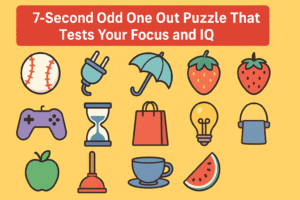




Puzzles have always fascinated people across generations. From classic crosswords and Sudoku to modern brain teasers on social media, we humans enjoy challenging our minds and testing how quickly we can solve problems. Among these, the “Odd One Out Puzzle” is one of the simplest yet trickiest challenges that continues to capture attention worldwide.
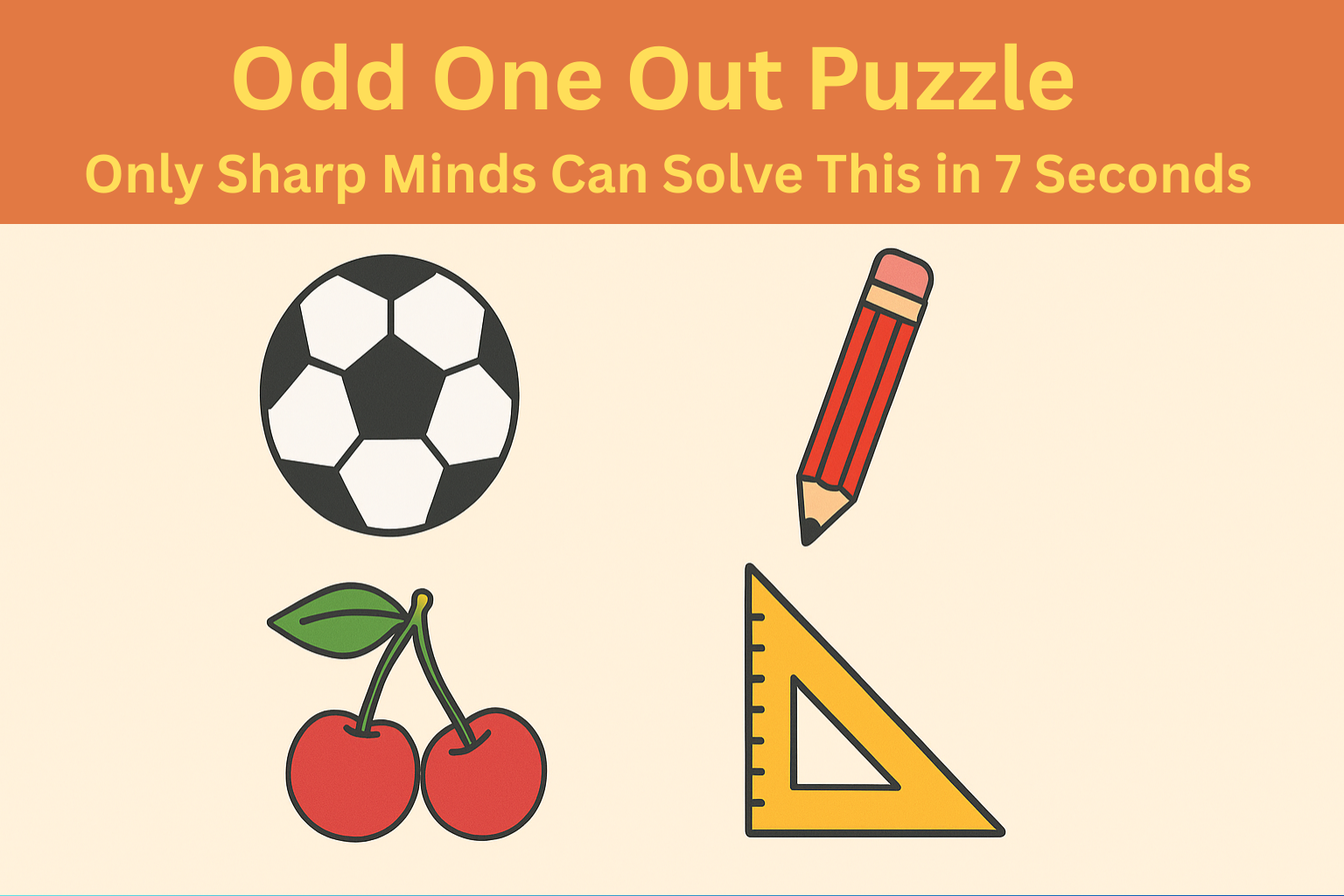
At first glance, this puzzle looks easy—just pick the item that doesn’t belong in the group. But here’s the catch: when you add a time limit of 15 seconds, the difficulty rises dramatically. Suddenly, your brain is under pressure, and your observational skills, focus, and speed of thinking are put to the ultimate test.
In this article, we’ll explore the psychology behind odd one out puzzles, why they are so addictive, tips to solve them faster, and of course, why only the sharpest minds can crack them within the 15-second challenge.
What is an Odd One Out Puzzle?
The concept of “Odd One Out” is simple: you are given a group of objects, words, numbers, or symbols, and you have to identify the one item that doesn’t fit the pattern.
For example:
- Apple, Banana, Mango, Carrot → Carrot is the odd one out because it’s a vegetable.
- 2, 4, 6, 7, 8 → 7 is the odd one out because it’s not even.
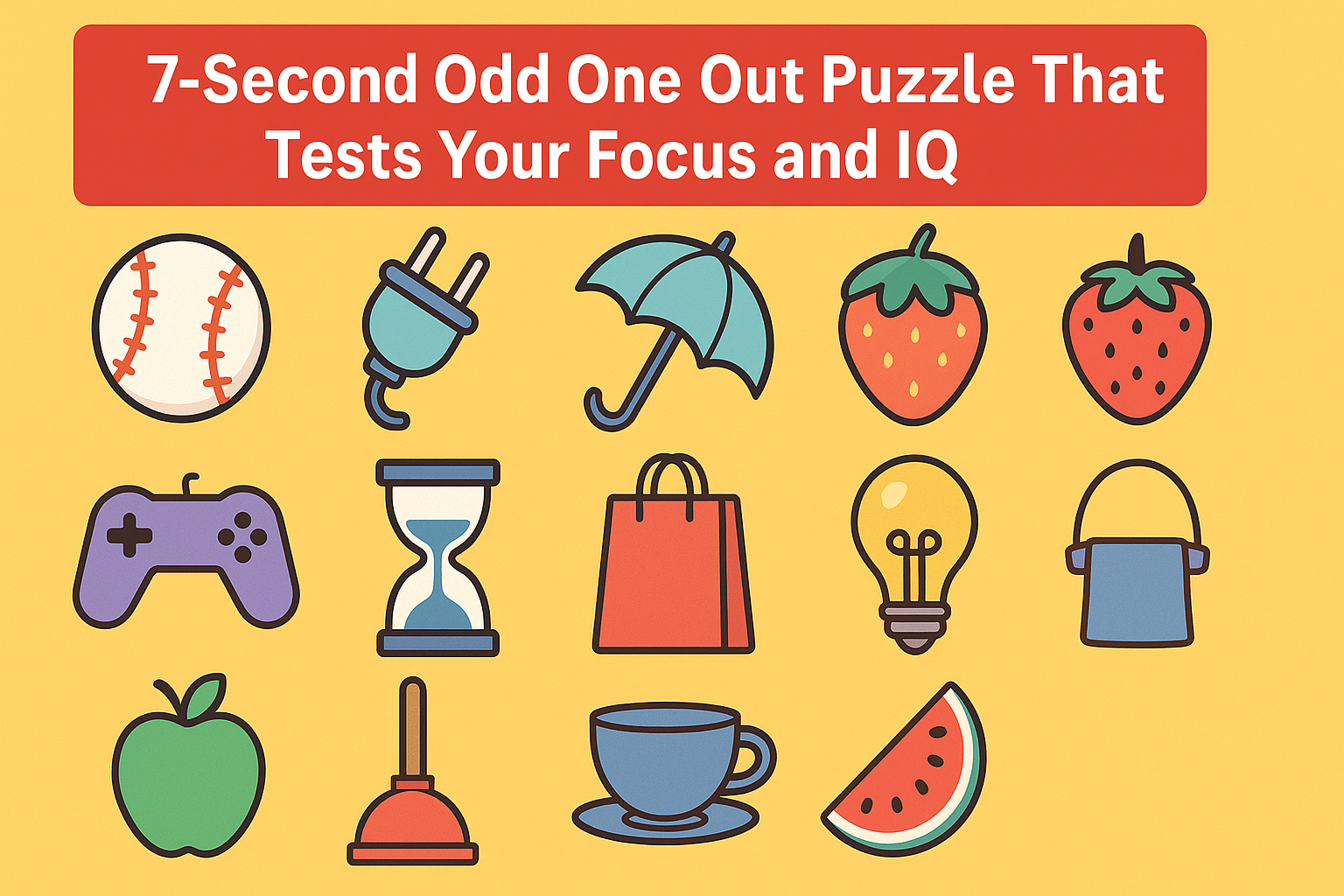
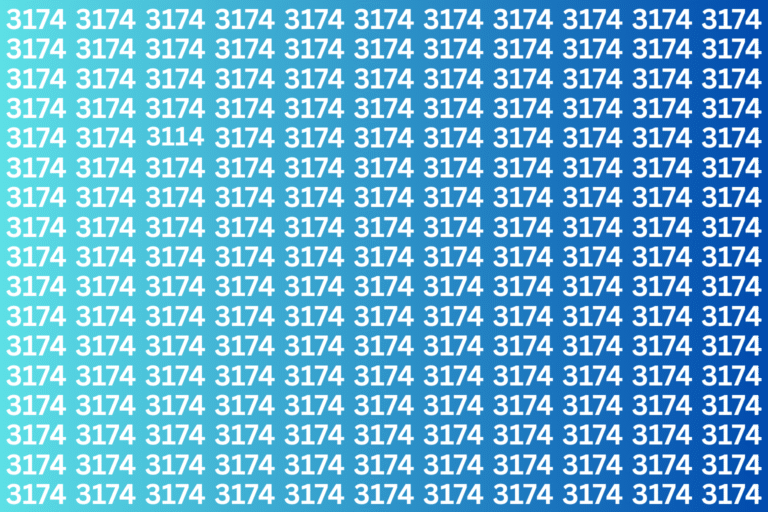
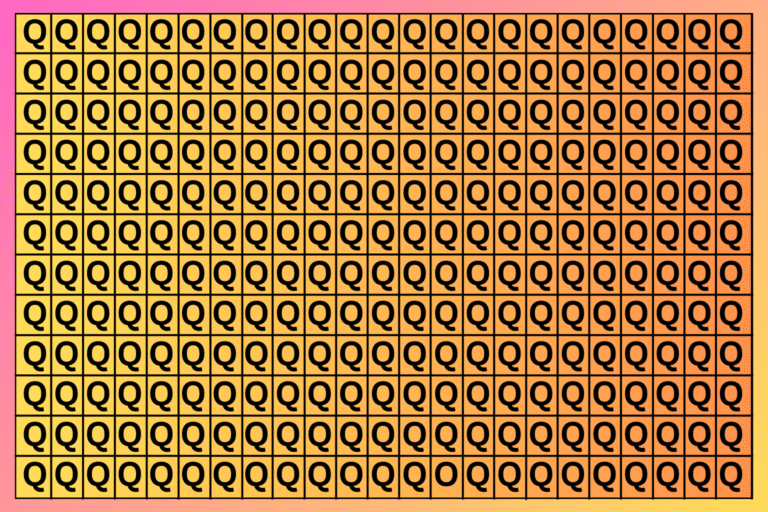
In visual puzzles like the one in the image above, the challenge often involves spotting an object that looks different or doesn’t logically belong to the group. These puzzles engage both your analytical reasoning and visual processing skills.
Why Are Odd One Out Puzzles So Popular?
Odd one out puzzles may look like child’s play, but they have a universal appeal. Here’s why people love them:
- Simplicity – The rules are easy to understand, making them accessible to people of all ages.
- Brain Exercise – They test observation, logic, and reasoning skills.
- Instant Gratification – Solving one quickly gives a sense of achievement.
- Social Media Friendly – Perfect for challenges like “Can you solve this in 15 seconds?” which often go viral.
- Competitive Fun – People love competing with friends or family to see who can solve it faster.
The Psychology Behind Odd One Out Challenges
Odd one out puzzles tap into some fascinating aspects of human psychology:
- Pattern Recognition: Our brains are wired to recognize patterns and similarities. When something doesn’t fit, it stands out—if we’re sharp enough to notice.
- Cognitive Flexibility: These puzzles measure how quickly we can switch between ideas and perspectives to analyze differences.
- Selective Attention: Solving them in under 15 seconds requires intense focus and the ability to block distractions.
- Stress and Pressure: The time limit creates pressure that often makes simple puzzles feel complex.
This is why solving such puzzles isn’t just about intelligence—it’s also about how well your brain handles quick decision-making under time constraints.
The 15-Second Challenge
The challenge to solve the odd one out in just 15 seconds is what makes this puzzle so exciting. Without the timer, almost anyone can eventually figure it out. But when the clock is ticking, the stakes are higher.
In fact, studies on brain teasers suggest that adding a time constraint activates different parts of the brain related to urgency and decision-making. For many, this leads to rushed answers and mistakes, but for sharp thinkers, it becomes an opportunity to showcase mental agility.
If you can consistently solve odd one out puzzles in under 15 seconds, it suggests you have strong visual intelligence, quick reasoning, and a sharp mind.
Example Breakdown: The Puzzle in the Image
Let’s analyze the puzzle shown in the image above. You see four objects:
- A football
- A pencil
- A set of cherries
- A triangle ruler
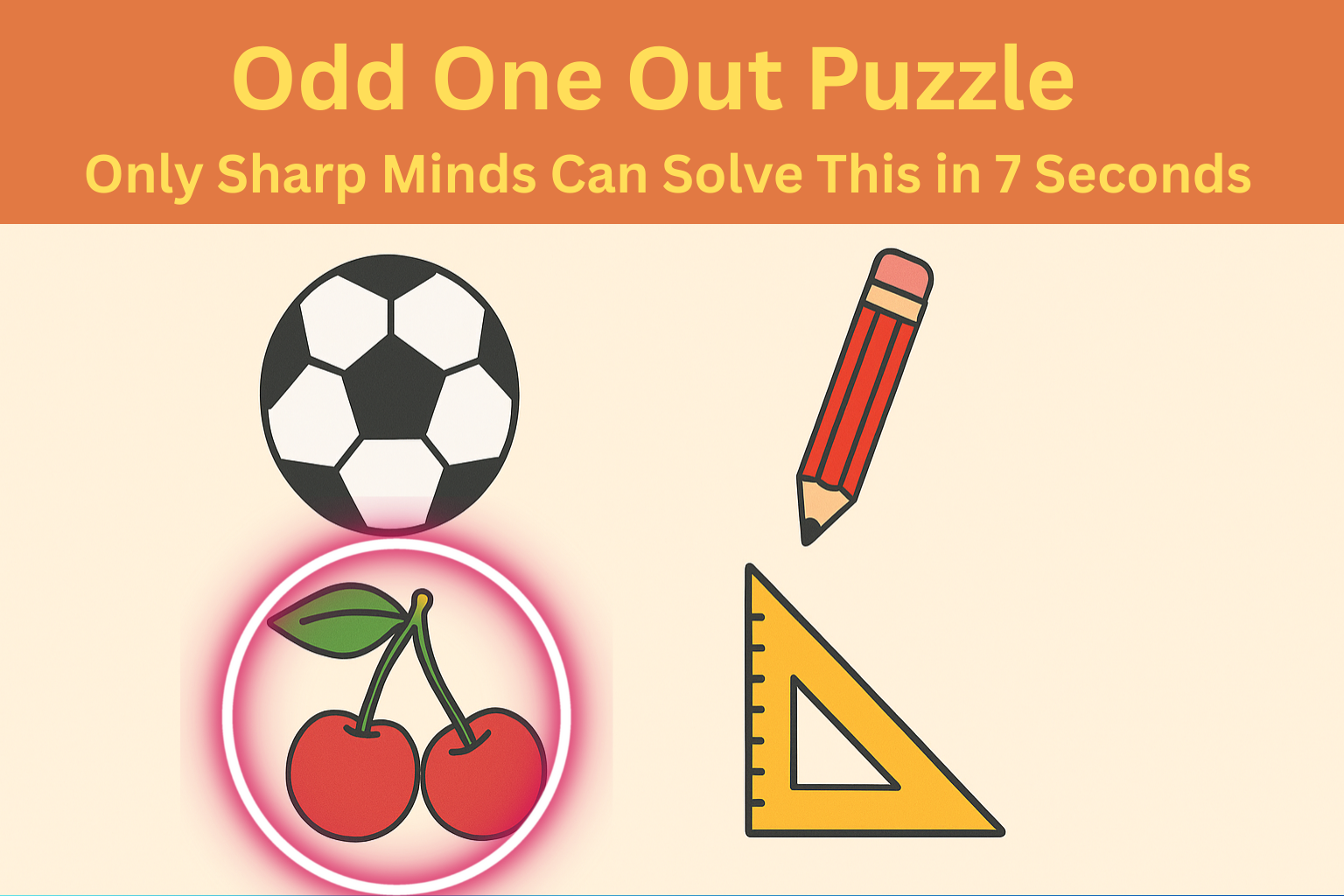
At first, all seem ordinary. But if you look closely, three of them (football, pencil, triangle ruler) are related to sports, education, or human-made objects, while the cherries are natural and belong to food.
That makes the cherries the odd one out.
Now, the trick here is not just identifying the answer but doing so under 15 seconds. Many people waste time analyzing unnecessary details, but sharp minds focus on the obvious mismatch quickly.
Benefits of Solving Odd One Out Puzzles
Odd one out puzzles are more than just a fun activity. They provide several mental benefits:
- Boosts Observation Skills – Trains your eyes and brain to notice details others might miss.
- Enhances Memory – Engaging with patterns and differences strengthens cognitive recall.
- Improves Focus – Practicing these puzzles helps sharpen concentration.
- Encourages Fast Thinking – Helps train your brain to think quickly under pressure.
- Relieves Stress – Solving puzzles can be relaxing and give a break from daily worries.
Tips to Solve Odd One Out Puzzles Faster
If you want to sharpen your puzzle-solving skills and beat the 15-second mark, here are some tips:
- Scan the Group Quickly: Don’t overthink—trust your instincts.
- Look for Categories: Check whether items are related by type (e.g., fruits, tools, shapes).
- Spot Outliers: See if one item looks different in design, color, or purpose.
- Practice Regularly: The more puzzles you solve, the faster your brain adapts.
- Stay Calm Under Pressure: Stress slows you down; focus instead on enjoying the challenge.
Odd One Out Puzzle: Only Sharp Minds Can Solve This in 15 Seconds – Answer
Why Sharp Minds Excel at These Puzzles
When people say, “Only sharp minds can solve this puzzle in 15 seconds,” it isn’t just a marketing phrase—it’s true. Sharp thinkers combine:
- Quick observation
- Analytical reasoning
- Confidence in decision-making
- The ability to ignore distractions
This combination allows them to find the odd one out in record time.
Odd One Out in Daily Life
Interestingly, odd one out puzzles aren’t limited to games. We use this skill in everyday life without even realizing it:
- Detecting a spelling error in text.
- Spotting an unusual traffic sign.
- Identifying a misplaced item in a room.
- Finding errors in data or reports.
The same mental muscles used in these puzzles are used in real-life problem solving, making them not just fun but also practical.
FAQs on Odd One Out Puzzles
Q1: Why are odd one out puzzles considered good brain exercises?
They stimulate observation, reasoning, and decision-making skills while keeping the brain active and engaged.
Q2: Can solving these puzzles really improve intelligence?
While they may not increase IQ directly, they sharpen cognitive abilities like focus, memory, and problem-solving, which contribute to overall mental agility.
Q3: What makes solving in 15 seconds so difficult?
The time pressure forces quick thinking, which can lead to mistakes. It tests how fast and accurately you can process information.
Q4: Are odd one out puzzles suitable for children?
Absolutely! They are excellent for kids as they help develop reasoning skills, vocabulary, and logical thinking in a fun way.
Q5: Can practicing daily improve speed in solving these puzzles?
Yes. Like any skill, regular practice improves speed, accuracy, and confidence in tackling such challenges.
Q6: Do these puzzles help in professional life?
Yes, indirectly. They train your brain to identify errors, analyze situations quickly, and make better decisions—skills that are valuable in most careers.