




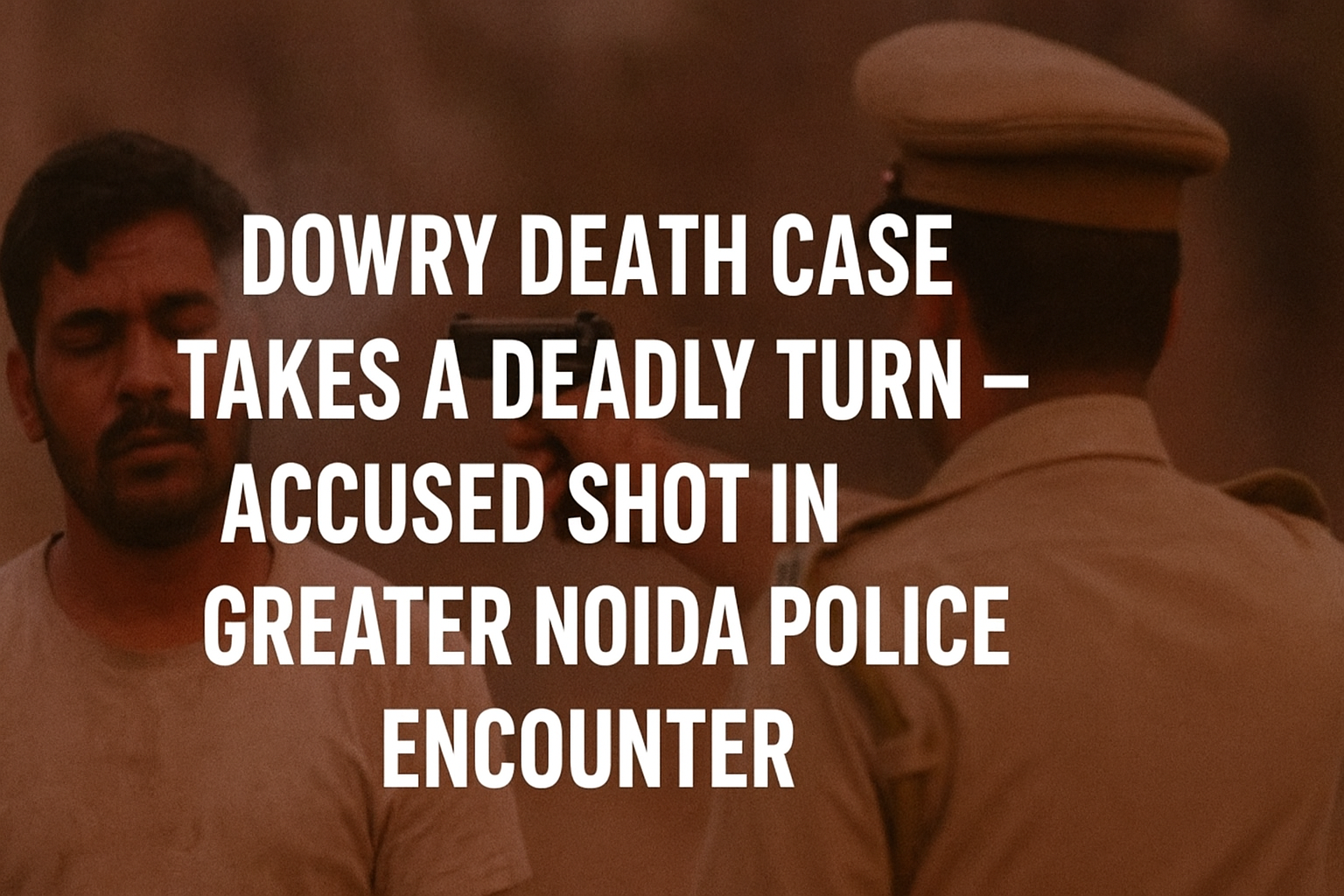
The ongoing menace of dowry-related crimes in India has once again taken a shocking turn in Greater Noida, where an accused in a dowry death case was gunned down in a police encounter. The incident has stirred up a storm of debates around women’s safety, law enforcement practices, and the dark reality of dowry traditions that still plague Indian society. While the accused’s death in an encounter brings temporary closure to one case, it also raises broader questions about justice, social reform, and the effectiveness of current legal frameworks.
The Background of the Case
The case originated from a heart-wrenching incident of dowry death, where a young married woman allegedly lost her life under suspicious circumstances linked to harassment for dowry. Dowry-related deaths are not isolated events in India; they remain an unfortunate reality despite the Dowry Prohibition Act of 1961 and multiple awareness campaigns. The victim, like many others, was caught in the cycle of emotional abuse, financial demands, and family pressures that eventually cost her life.
As investigations unfolded, the police identified her husband and his family members as primary suspects. Reports suggested that the woman was tortured for not fulfilling demands of money and gifts even after marriage. Public outrage began to build, and calls for strict action grew louder.
The Encounter in Greater Noida
On a late evening in Greater Noida, police officials received intelligence about the movement of the main accused in the dowry death case. A chase reportedly ensued when the accused tried to escape, leading to an exchange of fire. The accused was critically injured in the encounter and later declared dead at the hospital.
The encounter immediately became a trending topic in local and national news. For many, it symbolized instant justice in a system often accused of being slow and burdensome. For others, however, it raised concerns about whether such encounters undermine due process and the constitutional right to a fair trial.
The Social Context of Dowry Deaths
To understand the gravity of this incident, one must place it within the broader context of dowry-related violence in India. Despite being outlawed decades ago, dowry demands continue to thrive in both rural and urban India. From middle-class households to affluent families, the practice of demanding cash, vehicles, property, or expensive gifts during and after marriage still exists under various guises.
The numbers are grim: every year, thousands of women die due to dowry harassment, either through direct violence or by being driven to suicide. The root cause lies in deep-seated patriarchal mindsets where a bride is often seen as a financial liability unless accompanied by material wealth.
In this particular case, the woman’s tragic death highlighted once again how young brides are victimized, and how families fail to protect their daughters from such abuse.
Police Action: Justice or Short-Cut?
The Greater Noida police have defended the encounter, stating that the accused was attempting to flee and opened fire first, leaving them with no option but to retaliate. Encounters are not new in Uttar Pradesh; in fact, the state has seen hundreds of such incidents in the last decade, often celebrated as examples of strong policing.
However, critics argue that encounter killings bypass the judicial process. If the accused had been tried in court, more evidence could have been brought to light, potentially exposing other accomplices in the crime. The death of the main accused may also reduce the chances of delivering full justice to the victim’s family if other conspirators escape legal scrutiny.
This debate reflects the tension between public demand for immediate justice and the rule of law. While grieving families often feel relief after an encounter, human rights advocates continue to emphasize the importance of fair trials.
Impact on Women’s Safety Movement
The encounter has reignited conversations around women’s safety and justice in India. On one hand, it sends a strong message that crimes like dowry deaths will not be tolerated and that culprits cannot escape accountability. On the other hand, it highlights the failure of preventive measures.
If dowry practices were effectively curbed and societal mindsets changed, such tragic incidents would not occur in the first place. Legal reforms and police action are necessary, but without a cultural transformation, the root problem will persist.
Legal Framework Against Dowry
India already has strict laws against dowry, including:
- Dowry Prohibition Act, 1961 – Prohibits giving and receiving dowry.
- Section 304B of the Indian Penal Code (IPC) – Defines dowry death and sets a minimum sentence of 7 years to life imprisonment.
- Section 498A of the IPC – Deals with cruelty by husband or relatives of husband, often invoked in dowry harassment cases.
Despite these provisions, low conviction rates and lengthy trials weaken the system. Victims and their families often hesitate to approach the law due to fear of social backlash or lack of resources.
Public Reaction
The Greater Noida encounter drew mixed reactions:
- Supporters of police action praised it as a bold step that saves time and sends a warning to dowry offenders.
- Critics questioned whether justice was truly served, pointing out that punishment should be decided by courts, not bullets.
- Women’s rights groups expressed concern that the focus on encounters diverts attention from long-term preventive measures like education, awareness, and strict monitoring of marriages.
The Way Forward
This tragic case and its violent end offer several lessons for society:
- Strengthening Awareness: Families need to actively reject dowry practices, both at the time of marriage and afterward.
- Legal Reform and Fast-Track Courts: Instead of relying on encounters, the judicial system should be empowered to deliver swift justice in dowry cases.
- Support for Victims: Helplines, women’s shelters, and legal aid centers should be made more accessible to women facing harassment.
- Community Responsibility: Relatives, neighbors, and friends must stop turning a blind eye to dowry harassment. Reporting such cases early can save lives.
Frequently Asked Questions (FAQs)
1. What is a dowry death?
A dowry death occurs when a woman dies under unnatural circumstances within 7 years of marriage, and there is evidence that she was harassed for dowry by her husband or in-laws.
2. Why do dowry-related deaths still happen in India?
Despite laws, dowry deaths continue due to entrenched cultural practices, social pressure, and greed. Many families demand dowry under the guise of “gifts,” and victims often face silence or lack of support from their own families.
3. Was the encounter in Greater Noida legal?
Police claim the encounter was in self-defense during an attempted escape. However, whether it was fully justified will be determined through internal inquiry and judicial oversight.
4. Do encounters ensure justice?
Encounters may bring immediate relief to victims’ families but bypass the judicial process. True justice comes from fair trials, which also help identify all guilty parties.
5. How can dowry-related crimes be reduced?
Reducing dowry crimes requires strong law enforcement, faster trials, social awareness campaigns, and most importantly, a change in mindset where daughters are valued equally as sons.
6. What should a woman do if she faces dowry harassment?
She can file a complaint under IPC Section 498A, approach women’s helplines, contact NGOs working for women’s rights, or seek protection through the police and women’s commissions.