



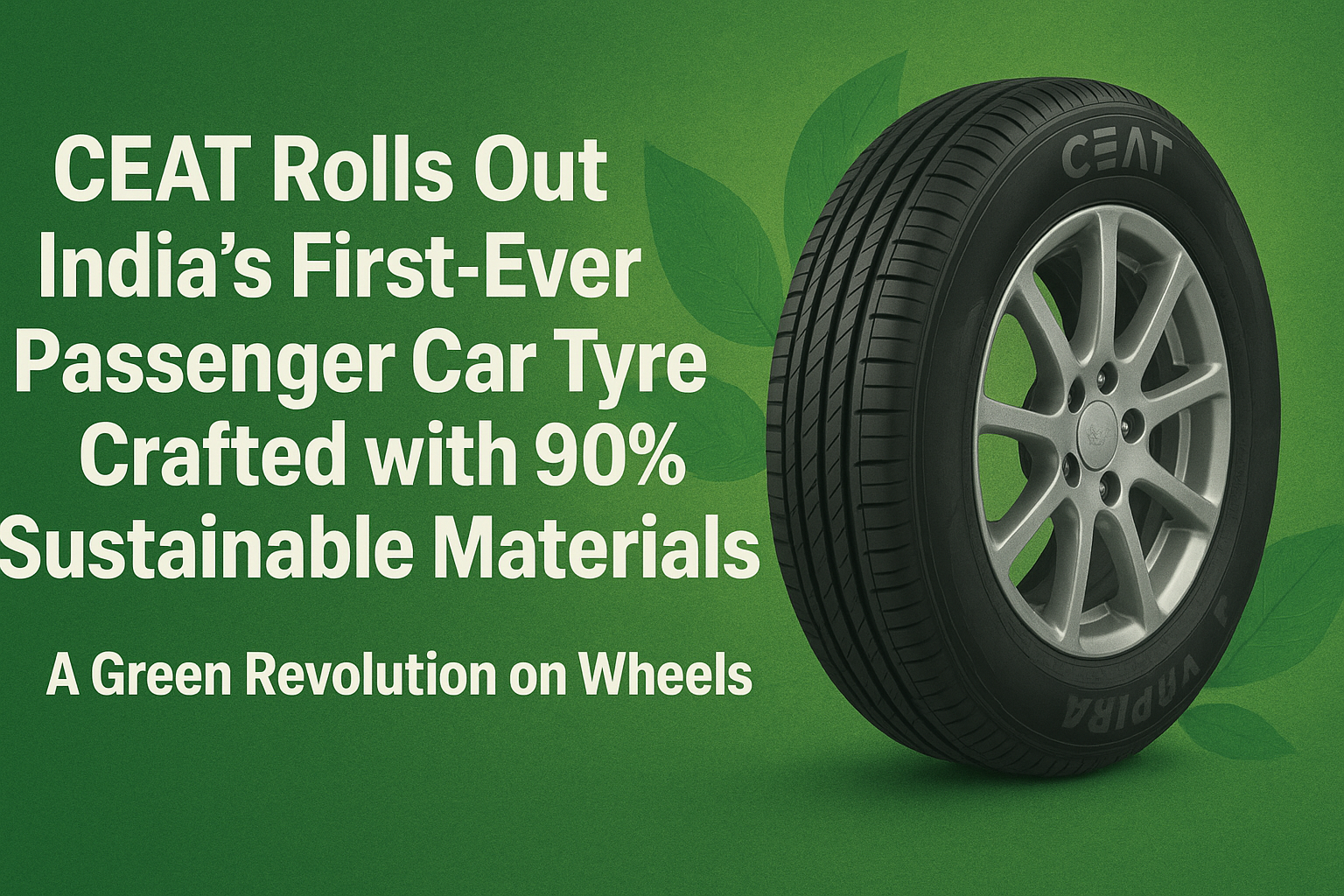
In a landmark step towards sustainability and innovation, CEAT has achieved something that could redefine the future of mobility. The company has unveiled India’s first-ever passenger car tyre made with 90% sustainable materials, a remarkable advancement that blends technology, eco-consciousness, and performance.
This launch isn’t just about tyres—it’s about a green revolution on wheels. As climate change concerns rise and industries across the globe move towards carbon neutrality, CEAT’s innovation signals the dawn of a new era in the Indian automotive industry.
Let’s dive deep into what makes this development so revolutionary, how it impacts drivers, the automotive sector, and the planet.
Why This Tyre is a Game-Changer
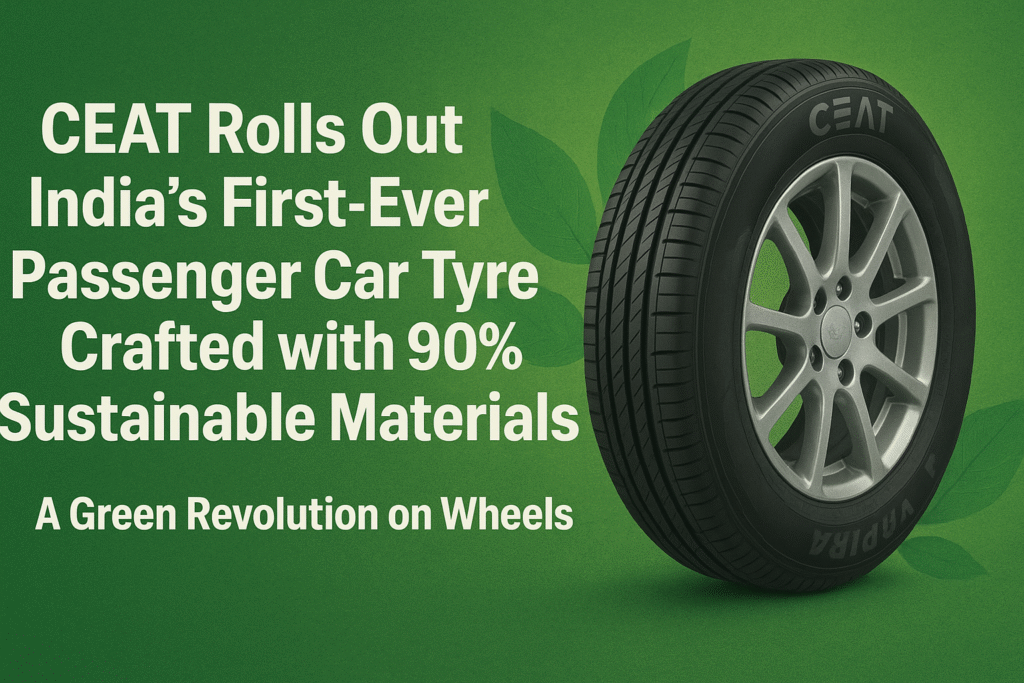
Tyres are one of the most overlooked yet essential parts of any vehicle. They ensure safety, comfort, and efficiency. Traditionally, tyres are made using petroleum-based materials, synthetic rubbers, and other non-renewable resources. These materials not only consume enormous amounts of energy during production but also have a lasting environmental footprint.
CEAT’s move to create a tyre with 90% sustainable materials changes the narrative completely. This innovation is not a cosmetic attempt at sustainability; it represents a genuine transformation in how tyres are conceptualized, designed, and manufactured.
Key Highlights of the Sustainable Tyre:
- 90% sustainable material composition – including renewable, recycled, and bio-based components.
- Reduced carbon footprint – lowering the impact of manufacturing on the environment.
- Maintained performance – ensuring that eco-friendliness does not compromise safety, durability, or grip.
- Industry-first initiative – positioning India at the forefront of green automotive innovations.
What Goes Into a Sustainable Tyre?
Creating a tyre with such a high level of sustainability isn’t simple. It requires cutting-edge research, advanced material engineering, and collaboration across the supply chain.
Some of the materials believed to be part of this innovation include:
- Natural rubber – harvested sustainably from plantations.
- Silica from rice husk ash – a byproduct of agriculture, turning waste into value.
- Recycled carbon black – recovered from old tyres and industrial waste.
- Bio-based oils – replacing petroleum-derived oils with plant-based alternatives.
- Steel and textile reinforcements – made from recycled or sustainably sourced sources.
This combination of eco-friendly materials makes the tyre a true marvel of green engineering, while still meeting the rigorous demands of modern road conditions.
Performance Without Compromise
A major concern with sustainable innovations is whether they can perform on par with conventional products. CEAT has addressed this head-on by ensuring that the tyre is not just eco-friendly but also reliable and efficient.
Drivers can expect:
- Excellent road grip – even on wet and challenging surfaces.
- Durability – withstanding long drives and diverse Indian road conditions.
- Fuel efficiency – thanks to reduced rolling resistance, which also lowers emissions.
- Safety standards – meeting or exceeding industry benchmarks.
This means motorists won’t have to choose between performance and sustainability—they get both.
A Step Towards India’s Green Mobility Goals
India is undergoing a major transformation in mobility, with electric vehicles, cleaner fuels, and sustainable infrastructure becoming priorities. CEAT’s new tyre fits seamlessly into this vision.
- For EV owners, a sustainable tyre complements their choice of eco-friendly transportation.
- For the automotive industry, it sets a precedent for integrating sustainability across components.
- For the government, it supports the push towards reducing carbon emissions and creating a circular economy.
This innovation also aligns with global trends, where leading tyre makers are racing to develop eco-friendly alternatives. With this move, India is not just catching up—it’s leading the charge.
Environmental Impact
The environmental benefits of this innovation go far beyond reducing raw material usage. Let’s break it down:
- Lower Carbon Emissions – Both during manufacturing and usage, thanks to eco-friendly materials and reduced rolling resistance.
- Waste Reduction – By using recycled components, CEAT diverts waste from landfills.
- Sustainable Sourcing – Bio-based oils and natural rubber are renewable, making the product circular in nature.
- Energy Efficiency – Lower energy consumption during production.
For every car on the road that adopts these tyres, the cumulative impact could be massive in terms of reducing environmental harm.
CEAT’s Role in Shaping the Future
CEAT has consistently been a pioneer in tyre technology in India. With this latest milestone, it is not just selling tyres—it is selling a vision of cleaner, greener mobility.
- Innovation Leadership – The brand establishes itself as a frontrunner in sustainable automotive technology.
- Global Competitiveness – Such moves help Indian companies stand tall in international markets.
- Consumer Awareness – By educating drivers about eco-friendly choices, CEAT influences purchasing behavior.
The ripple effect of this innovation could inspire other manufacturers, suppliers, and industries to follow suit.
Challenges Ahead
While this tyre marks a huge leap, challenges remain:
- Cost Factor – Sustainable materials may initially be more expensive.
- Mass Adoption – Scaling production for widespread consumer availability.
- Consumer Awareness – Many drivers are still unaware of eco-friendly tyre options.
However, with growing environmental consciousness and government support, these hurdles can be overcome.
What This Means for the Average Driver
For everyday drivers, this development is more than just a headline. It means:
- You can make a green choice without compromising safety or comfort.
- Your vehicle can contribute to reducing carbon emissions.
- By supporting such innovations, you encourage industries to keep moving towards sustainability.
In the near future, we may see eco-friendly tyres becoming the default choice, not just a niche option.
The Road Ahead
This is just the beginning. Imagine a world where:
- Every vehicle runs on sustainable tyres.
- Manufacturing plants operate on renewable energy.
- Old tyres are fully recycled into new ones.
With initiatives like CEAT’s, that vision doesn’t seem far-fetched anymore.
The automotive industry is shifting gears, and CEAT is steering India towards a future where mobility and sustainability go hand in hand.
FAQs
1. What makes CEAT’s new tyre different from regular tyres?
Unlike conventional tyres, which are made using petroleum-based materials, this tyre is crafted using 90% sustainable materials such as natural rubber, bio-based oils, recycled carbon black, and rice husk silica.
2. Will the performance of the sustainable tyre match traditional tyres?
Yes. CEAT has designed these tyres to ensure equal or better performance, offering strong grip, durability, safety, and fuel efficiency.
3. Are sustainable tyres more expensive?
Initially, they may cost slightly more due to advanced materials and processes. However, over time, as production scales up, costs are expected to reduce.
4. Can these tyres be used on electric vehicles (EVs)?
Absolutely. In fact, sustainable tyres are a perfect match for EVs, supporting their eco-friendly mission while enhancing efficiency.
5. How do these tyres benefit the environment?
They reduce carbon emissions, promote waste recycling, save energy during manufacturing, and lower fuel consumption due to reduced rolling resistance.
6. When will these tyres be available for customers?
CEAT is expected to roll them out gradually. Availability may initially be limited but will expand as production scales.
7. Does choosing sustainable tyres really make a difference?
Yes! Every eco-friendly tyre contributes to lowering emissions, reducing waste, and conserving resources. If adopted widely, the collective impact can be transformative.