



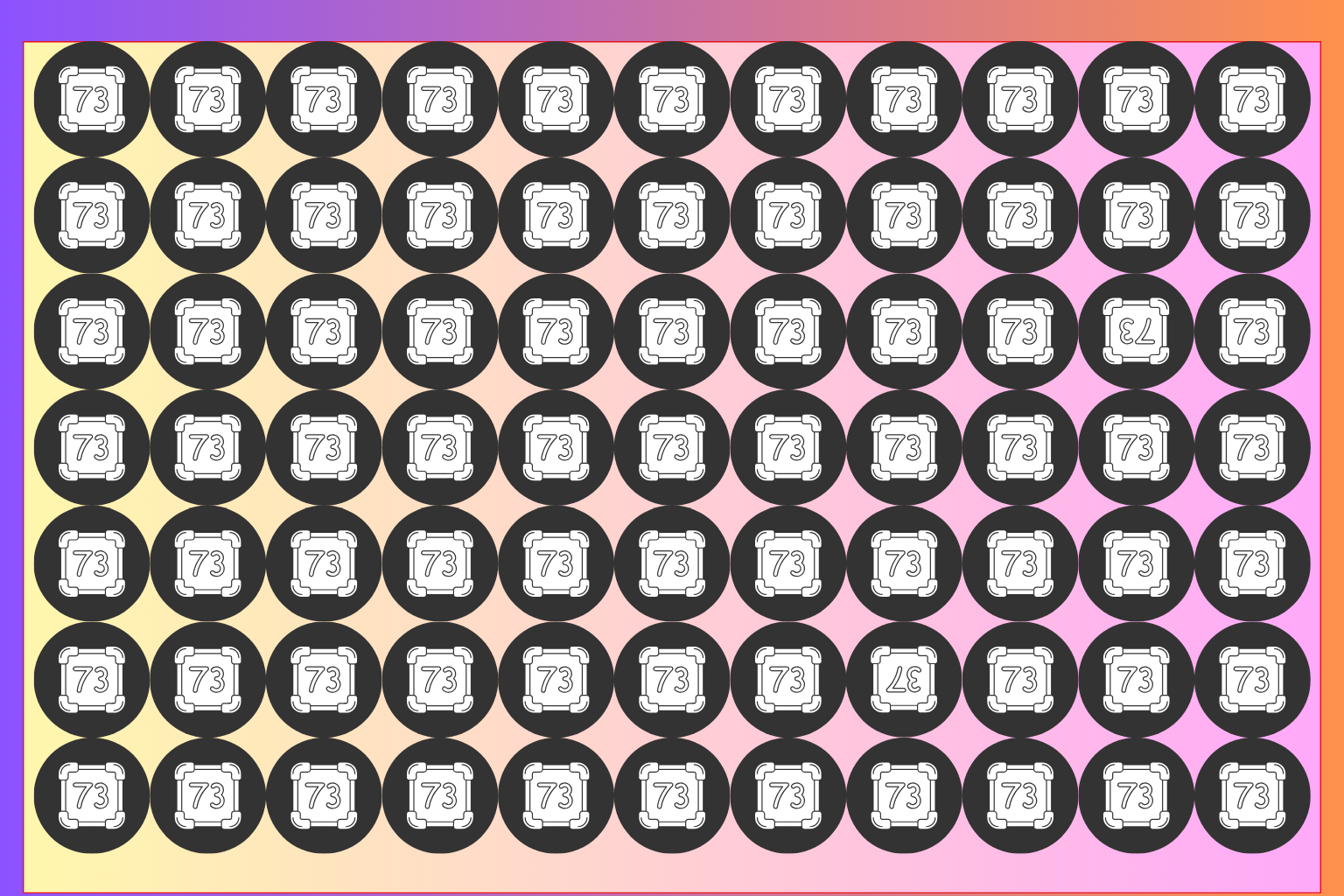
Optical illusions are one of the most fascinating ways to test how sharp our minds and eyes really are. While at first glance these puzzles might look simple, they often carry hidden twists that only a handful of people can spot. One of the latest viral challenges making waves online is the “Dozens of 73 Puzzle” — a brain teaser that asks you to find an inverted 73 and a hidden 37 among rows of number 73.
It sounds simple, right? Just look at the grid filled with the same number and spot the odd ones out. But here’s the catch: according to online buzz, only 1% of people can find them quickly without staring too long. This makes it not just a test of eyesight but also a measure of patience, focus, and attention to detail.
If you’re curious about how this puzzle works, why it confuses so many, and what it says about your observation skills, let’s break it down step by step.
Mind-Boggling Puzzle: In Dozens of 73 Only 1% Can See the Inverted 73 and 37 in This Optical Illusion Challenge
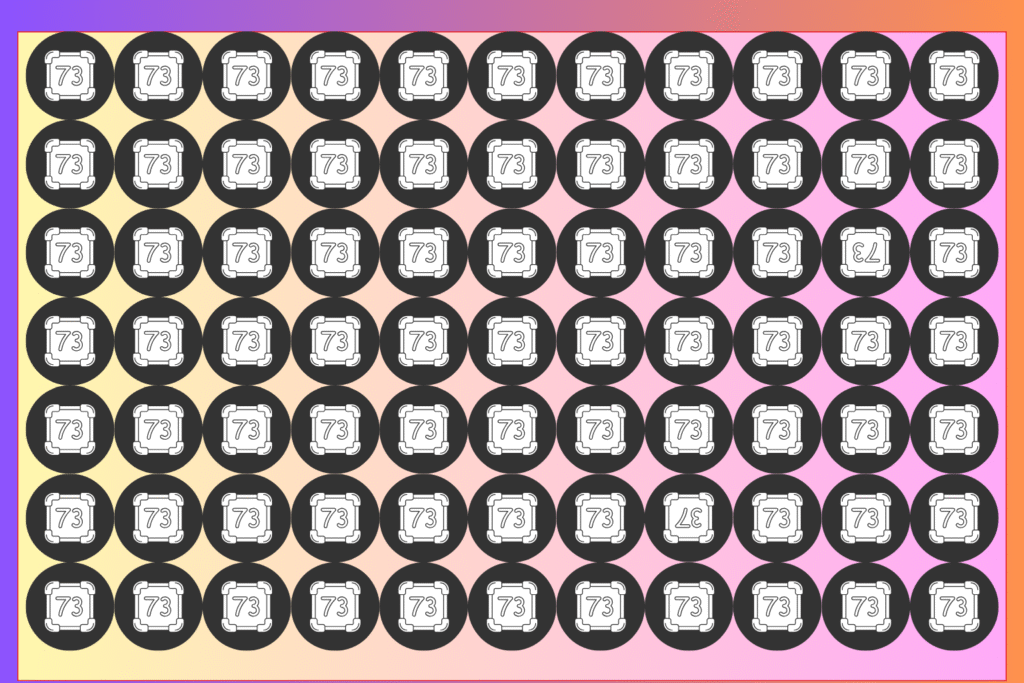
The puzzle features dozens of circles, each containing the number 73. At first glance, your brain processes them as identical — a visual trick known as pattern recognition. However, hidden within this grid are two intruders:
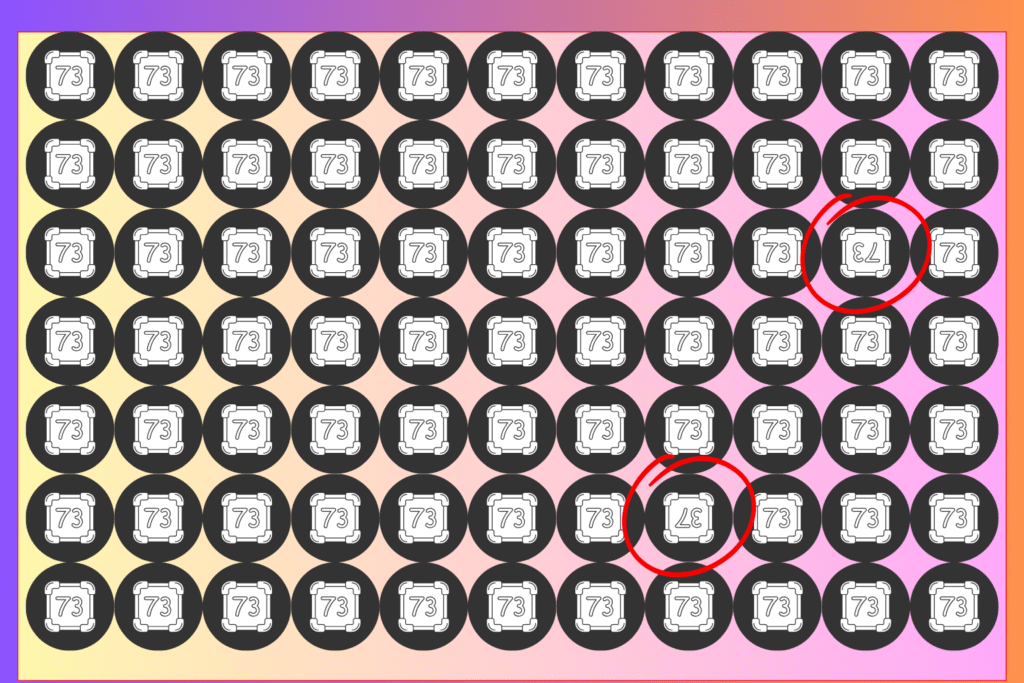
- An inverted 73, which looks slightly flipped compared to the others.
- A 37, where the digits are reversed but blend in surprisingly well.
These odd numbers are camouflaged so effectively that many people miss them even after several attempts. That’s exactly why the challenge has gone viral — it pushes the limits of human attention.
Why It’s So Hard to Spot
You might wonder why such a simple puzzle feels so mind-boggling. The answer lies in how our brain processes repetitive information.
- Pattern Overload: When dozens of similar images are placed side by side, your brain assumes they’re all identical. This phenomenon is known as “visual fatigue.”
- Selective Attention: Our minds are wired to focus on familiar patterns rather than anomalies, so the hidden numbers escape notice.
- Subtle Differences: The inverted 73 and 37 don’t look dramatically different — their changes are slight enough to trick the eye into glossing over them.
In short, the illusion works because our brains favor efficiency over perfection. Instead of examining every single “73,” the mind shortcuts by assuming they’re all the same.
What This Puzzle Reveals About You
While this puzzle is mainly for fun, it can also hint at how you process information.
- If you spotted the 37 quickly: You likely have sharp detail-oriented skills and strong pattern recognition.
- If you found the inverted 73 first: Your brain prioritizes shapes and symmetry, suggesting strong spatial awareness.
- If you struggled but eventually found both: You’re patient, persistent, and methodical in problem-solving.
- If you couldn’t spot them at all: Don’t worry — it’s not a reflection of intelligence. It simply means your mind prefers focusing on the bigger picture rather than minor differences.
The Viral Appeal of This Optical Illusion
Puzzles like this spread like wildfire online because they combine three powerful ingredients:
- Simplicity: Anyone can try it — no instructions needed.
- Competition: People love testing themselves and proving they’re among the “1% who can solve it.”
- Curiosity: Once you know there’s a hidden answer, it becomes irresistible to keep searching.
That’s why social media platforms like Facebook, Instagram, and TikTok are filled with people sharing their attempts, challenging friends, and debating who saw it first.
How to Improve Your Observation Skills
If puzzles like this leave you scratching your head, don’t worry — you can train your brain to get better at spotting hidden details. Here are some simple tips:
- Slow Down: Instead of scanning the entire puzzle quickly, move row by row.
- Change Perspective: Sometimes, looking at the puzzle from a different angle or distance makes anomalies stand out.
- Practice Regularly: Try crossword puzzles, spot-the-difference games, or word searches to sharpen focus.
- Rest Your Eyes: Eye fatigue makes details harder to notice. Take short breaks while solving.
Fun Fact: Why the Number 73 Was Chosen
The number 73 is visually interesting because its digits have contrasting shapes — a sharp angular “7” and a rounded “3.” This makes it easy to camouflage small distortions like flipping or reversing without drawing immediate attention.
By hiding a “37” and an inverted “73” among them, the puzzle creator ensures that your brain struggles to register the difference, enhancing the challenge.
Mind-Boggling Puzzle: In Dozens of 73 Only 1% Can See the Inverted 73 and 37 in This Optical Illusion Challenge – Answer
The Bigger Lesson From Optical Illusions
Beyond entertainment, optical illusions like this teach us something profound: what we see isn’t always reality. Our brains filter and interpret information constantly, often filling in gaps or overlooking anomalies.
In life, this means:
- We sometimes miss important details because we assume everything is “normal.”
- Perspective matters — looking at the same situation differently can reveal hidden truths.
- Attention to detail can make a huge difference in both small puzzles and real-world challenges.
Final Thoughts
The Mind-Boggling Puzzle of Dozens of 73 is more than just an online trend — it’s a clever reminder of how our brains work and how easily we can be tricked by repetition. Whether you spotted the hidden inverted 73 and 37 in seconds or struggled for minutes, the important takeaway is how fascinating and playful human perception can be.
Next time you see an optical illusion challenge online, give it a try. Not only will it sharpen your observation skills, but it’ll also remind you that sometimes, the smallest details can hide in plain sight.
FAQs
1. Why can only 1% of people find the inverted 73 and 37 quickly?
The figure is more symbolic than scientific. It emphasizes how tricky the puzzle is. In reality, with enough time, most people can find them, but spotting them instantly is rare.
2. Is this puzzle a test of intelligence?
Not at all. It tests attention to detail and visual perception rather than IQ.
3. Why do optical illusions go viral so easily?
Because they’re fun, competitive, and interactive. People love challenging themselves and sharing results with friends online.
4. Can practicing puzzles like this improve my brain power?
Yes. Regularly solving visual puzzles can sharpen focus, enhance memory, and improve problem-solving skills.
5. What should I do if I can’t see the hidden numbers?
Take a break, change your viewing angle, and scan row by row. Don’t worry if it takes time — persistence usually pays off.