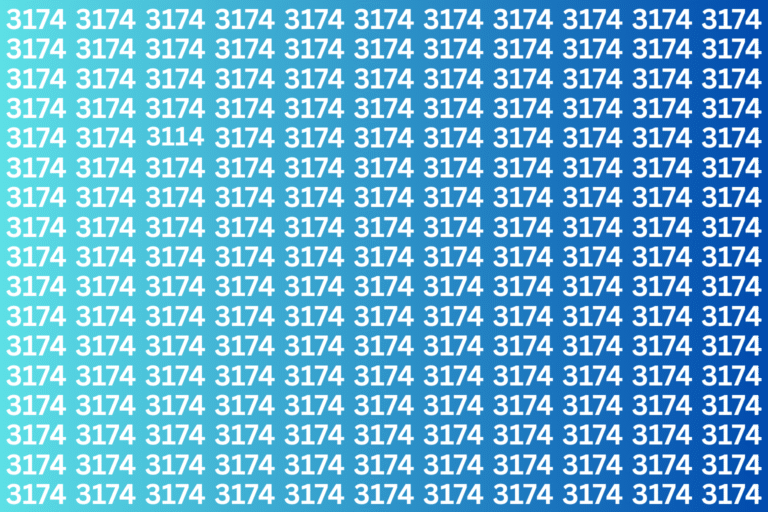




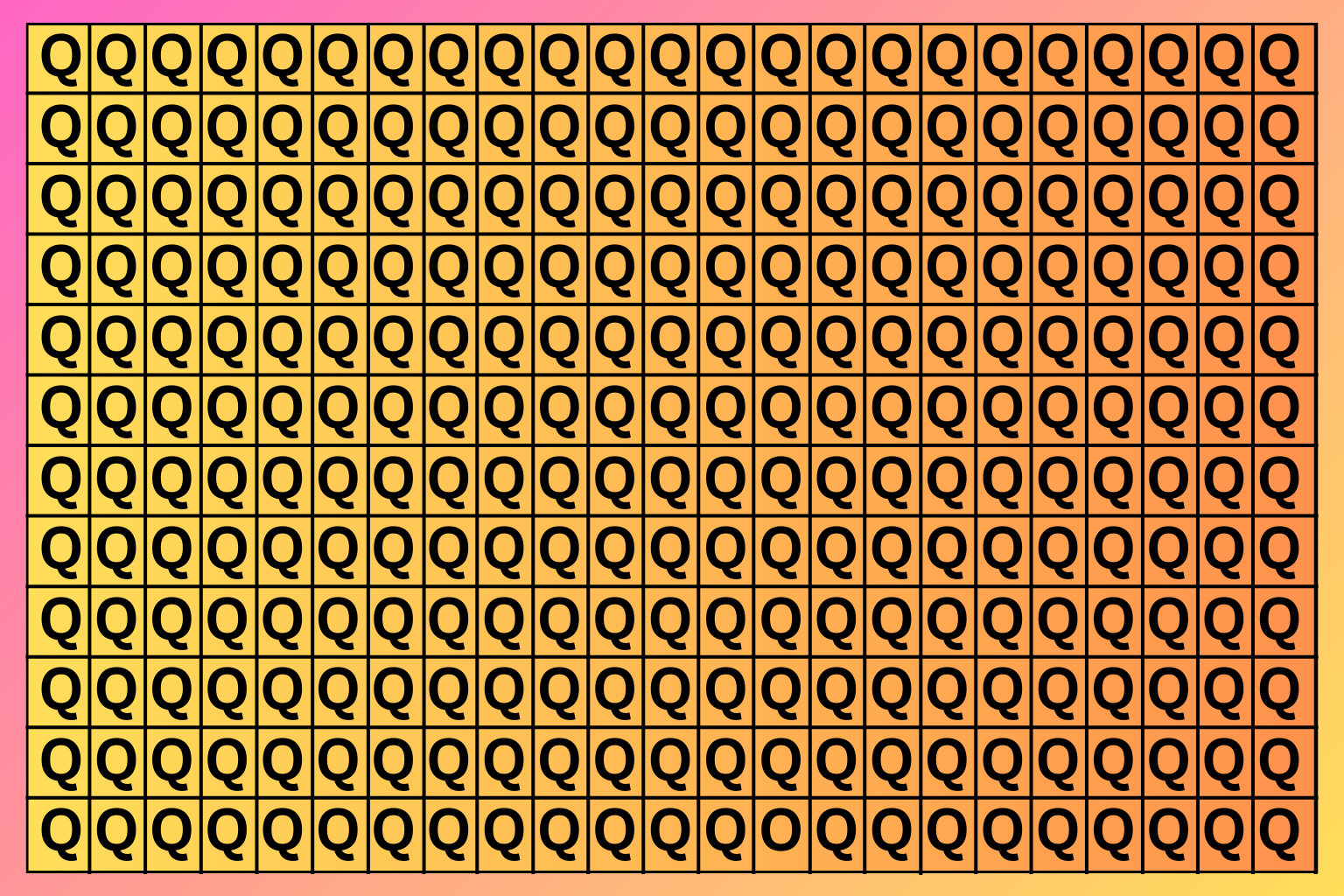
The internet loves a good challenge, and among the most entertaining trends online, optical illusions and brain teasers stand at the top. These puzzles not only entertain us but also test our observation skills, focus, and patience. One such viral puzzle that has captured attention everywhere is the “Find the hidden ‘O’ among the Q’s” challenge.
At first glance, this puzzle may look simple. Rows and rows of the letter Q are neatly arranged in a grid, and all you have to do is spot the lone letter O hiding among them. But once you dive in, you’ll realize it’s not as easy as it sounds. The similarity between the letters makes your eyes and brain work extra hard, pushing your focus to the limit.
Let’s take a deeper look into why this challenge is so fascinating, how it tricks your eyes, and why people can’t stop sharing it.
Why Optical Illusions Fascinate Us
Optical illusions have been around for centuries. From the artwork of ancient civilizations to modern-day viral internet puzzles, humans have always been intrigued by visuals that confuse or trick the brain.
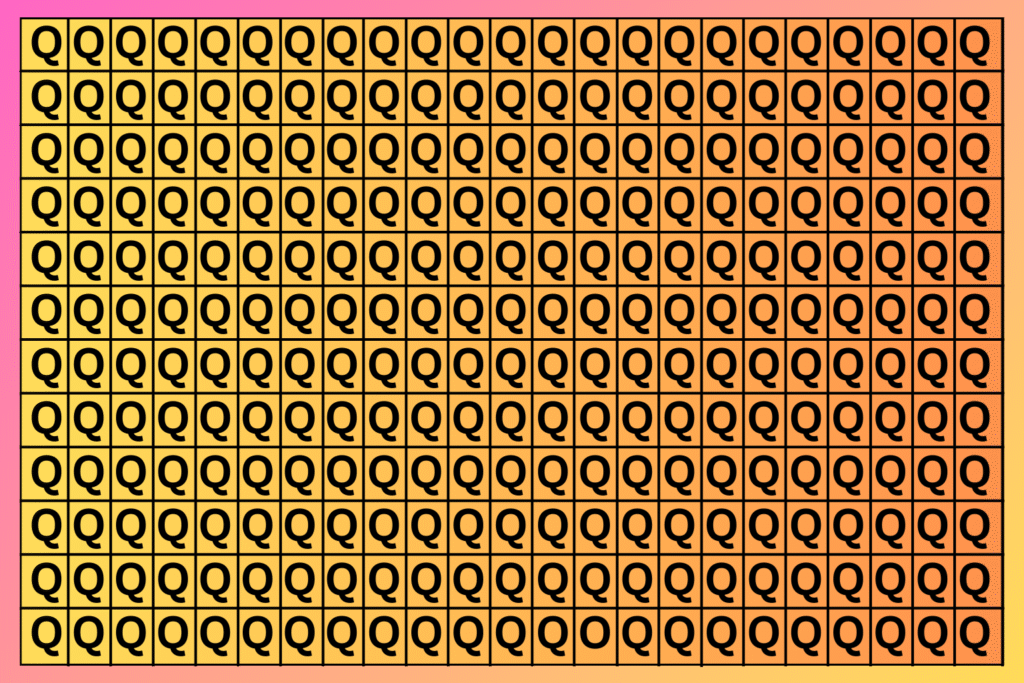
The main reason illusions are so captivating lies in how our visual perception system works. Our brain doesn’t just process what we see; it interprets and makes sense of the input. In puzzles like the “Q vs. O illusion”, our brains struggle because the letters look almost identical—the only difference being the small tail in the letter Q.
This similarity forces our minds to slow down, carefully analyzing each letter instead of instantly recognizing it. This process sharpens our observation skills and gives us a sense of accomplishment once we finally spot the odd one out.
The Challenge: Spotting the Hidden ‘O’
When presented with the puzzle, you’re faced with dozens of the letter Q packed into a grid. Somewhere in there is a sneaky little O waiting to be found.
At first glance, everything looks the same. Your eyes dart across rows and columns, hoping to land on the outlier. The difficulty is that Q and O are nearly identical—that small diagonal stroke in Q is what sets it apart. Because our eyes are used to scanning quickly, we often miss small differences unless we slow down.
What makes this challenge exciting is the time limit that often comes with it. Many people try to find the hidden O in under 5 or 10 seconds. The ticking clock adds pressure, making the task even trickier. Some succeed instantly, while others find themselves staring longer than expected.
Why This Puzzle Is Harder Than It Looks
- Similarity of Shapes: Both Q and O are round. The only distinction is the little line in Q, which our brain can easily overlook when scanning quickly.
- Pattern Repetition: The grid is repetitive, and our minds are wired to look for patterns. When everything looks similar, the brain assumes uniformity, making the odd element harder to detect.
- Cognitive Load: When faced with a cluttered image, our brain experiences information overload. Sorting through rows of similar letters puts our observation skills to the test.
- Time Pressure: Adding a time limit makes the challenge more stressful. The more rushed we feel, the easier it is to miss small details.
Benefits of Playing Such Optical Illusions
While these puzzles are fun, they’re not just for entertainment. Spot-the-difference and optical illusion challenges actually help improve mental sharpness. Here’s how:
- Boosts Focus and Concentration: You need to pay attention to tiny details, which trains your mind to stay sharp.
- Improves Visual Memory: Regularly attempting such puzzles can strengthen your ability to remember small details.
- Reduces Stress: Surprisingly, focusing on a puzzle can help your brain take a break from worries, acting almost like meditation.
- Enhances Problem-Solving Skills: It encourages a logical, step-by-step approach to solving challenges.
- Encourages Patience: These illusions teach you to slow down and look at things carefully.
How to Spot the Hidden ‘O’ Faster
If you’re struggling with the challenge, here are a few tips to improve your chances:
- Break the Grid into Sections – Instead of looking at the entire puzzle at once, divide it into smaller areas and scan each one carefully.
- Look for Imperfections – Focus on finding letters without the small diagonal stroke rather than scanning every single Q.
- Change Your Viewing Angle – Sometimes, tilting your head or looking from a different distance helps your brain spot the difference faster.
- Practice Regularly – Like any skill, observation improves with practice. The more puzzles you solve, the quicker your brain becomes at spotting details.
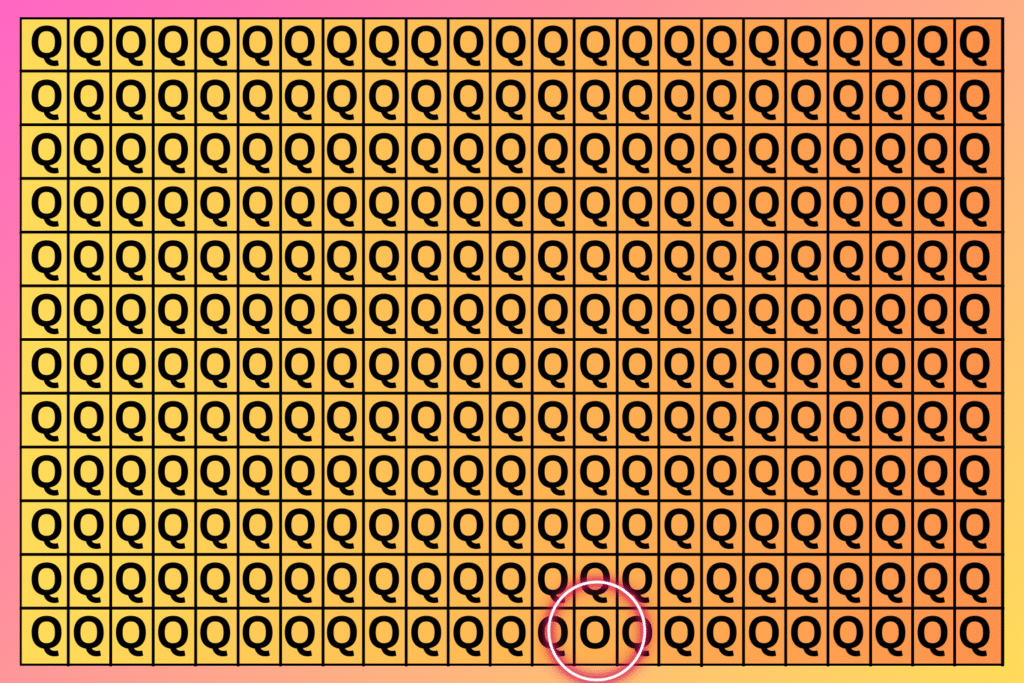
Optical Illusion Challenge: Find the Elusive ‘O’ Hidden Among Q’s Instantly – Answer
Why People Love Sharing This Challenge
The popularity of this illusion is no surprise. People love sharing their results with friends, family, and social media followers. Some key reasons include:
- Competition: Everyone wants to prove they have sharp eyesight and quick reflexes.
- Entertainment: It’s a fun way to pass time without needing any tools or setup.
- Satisfaction: Solving the puzzle gives a rush of accomplishment, almost like solving a riddle or crossword.
- Virality: Challenges like this spread fast because they’re easy to try and highly engaging.
Fun Variations of the Challenge
The “Find the O” illusion has sparked many similar puzzles. Some popular variations include:
- Spotting the number 6 among a sea of 8s.
- Finding the hidden animal in a complex drawing.
- Identifying one smiling emoji among dozens of sad faces.
- Searching for a specific word in a block of text filled with lookalike words.
These variations keep the fun going and continue to challenge the brain in new ways.
FAQs About the Optical Illusion Challenge
1. Why is it so difficult to find the O among Q’s?
Because Q and O are visually similar, our brain has a hard time distinguishing them quickly. The tiny diagonal line in Q is easy to overlook when our eyes are scanning fast.
2. How long does it usually take to solve this puzzle?
For some, it takes just a few seconds, while others may need over a minute. It depends on your observation skills, focus, and how accustomed you are to such challenges.
3. Can these puzzles really improve brain function?
Yes. While they won’t drastically increase intelligence, they do sharpen focus, attention to detail, and short-term memory. Regular practice can make you quicker at spotting differences.
4. Is there a trick to solving it instantly?
The best trick is to scan slowly and methodically. Instead of rushing, divide the puzzle into parts and carefully look for the letter without a diagonal stroke.
5. Why do people enjoy sharing these illusions online?
Because they’re quick, engaging, and competitive. People love testing themselves and challenging others to beat their time.