


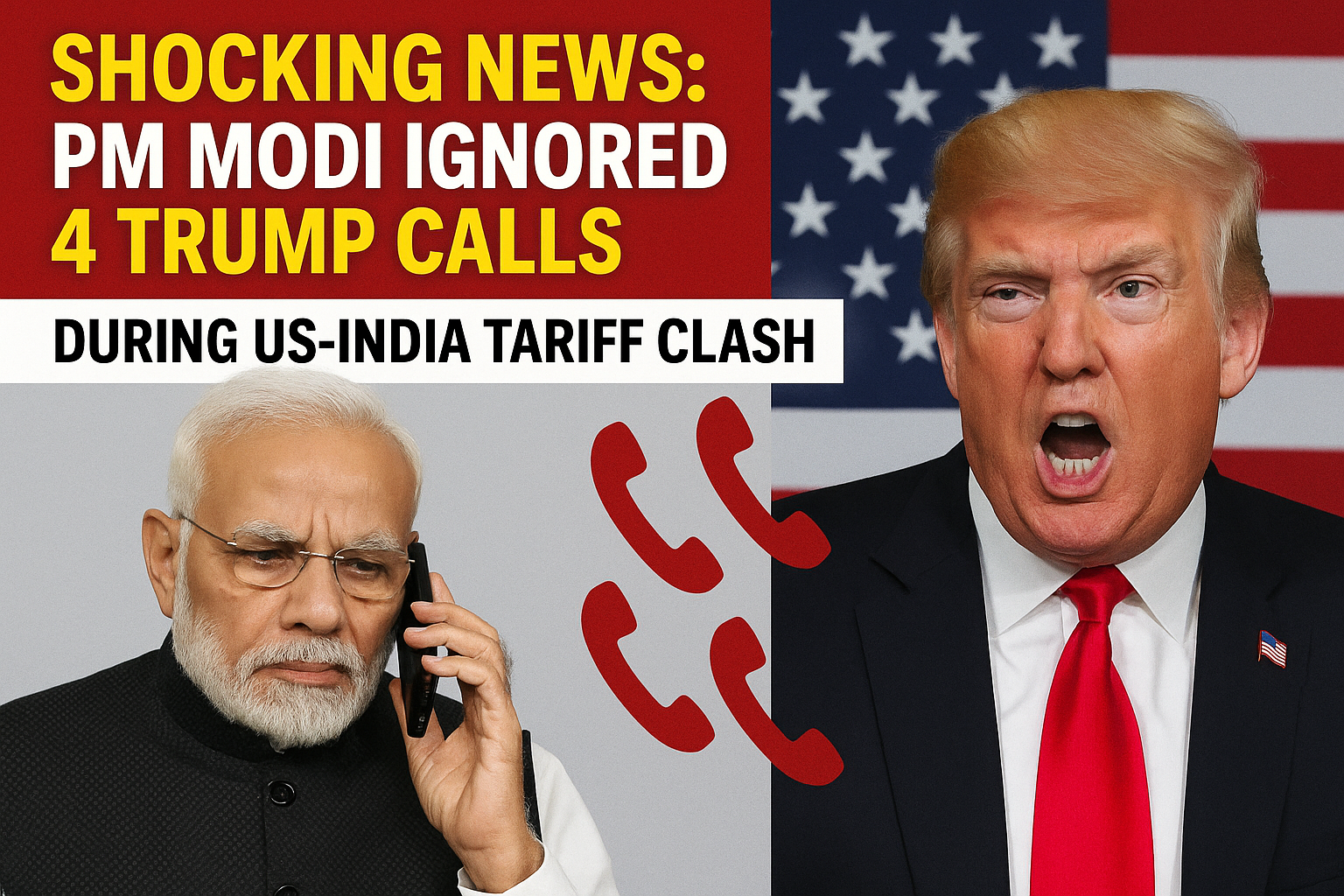
In the ever-shifting arena of international politics, few episodes grab attention as much as when two world leaders lock horns. Recently, a surprising revelation surfaced: during the heated tariff standoff between India and the United States, Indian Prime Minister Narendra Modi reportedly ignored four calls from then-US President Donald Trump.
This shocking detail has stirred conversations around the world, sparking questions about the nature of US-India relations, the strategies employed by leaders under pressure, and how economic clashes often translate into political drama at the highest level.
The Background: What Triggered the Clash?
The tension between Washington and New Delhi did not appear overnight. It stemmed from trade disagreements, particularly over tariffs and market access.
- India’s Position: India had long maintained a protective stance for its domestic industries, applying tariffs to safeguard local manufacturers and farmers. With a population exceeding 1.4 billion, India’s leaders often justified these policies as necessary to protect local jobs and ensure self-reliance.
- America’s Stance: Under Trump’s “America First” approach, Washington demanded better access for American goods and services in foreign markets. Trump repeatedly accused several countries—including India—of unfair trade practices, describing India as the “tariff king.”
The friction escalated when the US withdrew India from the Generalized System of Preferences (GSP) program, which had earlier allowed certain Indian exports to enter the American market duty-free. In retaliation, India slapped tariffs on a range of American products.
It was during this tense standoff that Trump allegedly reached out to Modi multiple times—only to be left unanswered.
Why Did Modi Ignore Trump’s Calls?
The idea of one global leader ignoring another’s repeated calls may sound dramatic, but in geopolitics, such decisions are rarely impulsive. Several possible explanations emerge:
- Strategic Silence
Diplomacy often involves more than words—it sometimes involves silence. By ignoring Trump’s calls, Modi may have been signaling India’s unwillingness to succumb to pressure. The act itself could be seen as a message: India would negotiate on its own terms, not under duress. - Domestic Political Priorities
At the time, Modi was navigating pressing domestic challenges, including economic reforms and political campaigns. It’s possible that engaging in direct conversation with Trump during heightened tensions could have been politically risky within India. - Avoiding Confrontation
Trump was known for his blunt and confrontational style of communication. By sidestepping phone calls, Modi may have sought to avoid being cornered into immediate concessions or public disagreements. - Diplomatic Calculations
In international diplomacy, timing is everything. Modi may have chosen to delay direct communication until conditions were more favorable for negotiation.
The Fallout of the Ignored Calls
Diplomatic silence can sometimes escalate tensions, and in this case, it certainly added fuel to the fire. Reports of Trump being frustrated over Modi’s unresponsiveness hinted at a growing rift in US-India relations.
However, the fallout was not catastrophic:
- Continued Engagement: Despite the tariff clash, the US and India continued high-level engagements. Defense and strategic cooperation between the two nations remained largely unaffected.
- Personal Rapport: Both leaders publicly showcased warmth during bilateral meetings, suggesting that personal diplomacy survived despite behind-the-scenes tensions.
- Economic Reality: Neither country could afford to alienate the other completely. The US is one of India’s largest trade partners, and India is a critical ally for America in balancing China’s influence in Asia.
What This Episode Reveals About Global Politics
The revelation that Modi ignored Trump’s calls during the tariff battle is not just gossip—it highlights deeper truths about global politics:
- National Interest Comes First
Leaders, regardless of alliances, ultimately act to protect national interests. Modi’s decision reflected India’s priorities, even at the risk of irking a powerful ally. - Diplomacy Is Not Always Polite
Behind the formal smiles and handshakes, international relations often involve cold strategies. Ignoring calls may seem rude, but in the world of realpolitik, it can be a calculated move. - The Limits of Personal Diplomacy
Trump often prided himself on building personal relationships with foreign leaders. This episode proved that personal warmth cannot always override national disagreements. - The Complexity of Trade Wars
Economic disputes rarely remain confined to numbers—they ripple into politics, diplomacy, and even personal interactions between leaders.
Lessons for Future US-India Relations
While this incident might have strained ties temporarily, it also offered valuable lessons for both nations:
- For India: Standing firm on issues of sovereignty and economic independence strengthens its image as a confident global player.
- For the US: Building long-term partnerships requires patience and respect for other nations’ domestic compulsions.
- For Both: Economic disagreements are inevitable, but they should not overshadow shared strategic and defense goals, particularly in the Indo-Pacific region.
Did Modi’s Strategy Work?
In hindsight, India did not face severe long-term repercussions for ignoring Trump’s calls. Though tensions spiked, the US eventually continued to engage with India across multiple fronts, including defense deals, technology cooperation, and joint military exercises.
This suggests that Modi’s calculated silence may have worked in India’s favor. It underscored India’s independence in foreign policy and showed that New Delhi would not bow down, even when faced with pressure from Washington.
The Human Side of Political Drama
Beyond policies and strategies, this story also reveals the human side of leadership. Trump, known for his impatience and direct approach, likely found the unanswered calls frustrating. Modi, on the other hand, appeared steadfast, prioritizing his own strategy over immediate dialogue.
It’s a reminder that world leaders, despite their formal roles, are human beings navigating egos, tempers, and political stakes. The silence of one leader can echo as loudly as the words of another.
FAQs on the Modi-Trump Tariff Clash
1. Why did PM Modi ignore Trump’s calls?
While no official explanation has been given, analysts suggest it was a strategic move to avoid pressure during trade negotiations. Modi’s silence may have been intended to assert India’s independence in decision-making.
2. Did this incident damage US-India relations permanently?
No. Although the episode highlighted tensions, both nations continued to strengthen ties in defense, technology, and strategic cooperation. The fallout was temporary.
3. What was the core issue of the tariff clash?
The dispute centered around tariffs and trade imbalances. The US accused India of unfair trade practices, while India defended its right to protect domestic industries.
4. How did Trump react to being ignored?
Reports suggested Trump was visibly frustrated. However, the issue did not escalate into a diplomatic crisis, as both leaders later continued high-level engagements.
5. Was India justified in ignoring the calls?
From a diplomatic perspective, India’s actions can be seen as asserting sovereignty. Whether justified or not depends on one’s viewpoint—some see it as bold, others as unnecessarily provocative.
6. Did this incident affect future negotiations?
Yes, it likely influenced the tone of future talks, making both sides more cautious. However, broader strategic interests ensured that the partnership endured.